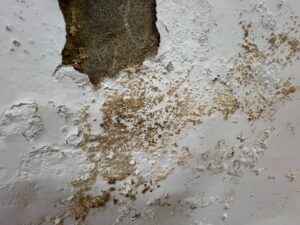
Rising damp happens when groundwater travels upward through the walls or floors of your home — the same way a sponge soaks up water. This moisture carries salts and minerals with it, which then damage paint, plaster, timber, and masonry over time.
The Main Cause: A Failed or Missing Damp-Proof Course (DPC)
Most Australian homes are built with a damp-proof course, a barrier designed to stop moisture rising. Rising damp occurs when this barrier has failed, has been bridged by soil or paving, or is missing altogether, which is common in older or heritage homes. When the damp-proof course is no longer functioning, groundwater can move freely up through bricks, mortar and concrete.
Other Contributing Factors
While the root cause is always moisture rising from the ground, certain conditions can make the problem worse. Poor drainage around the property, high groundwater levels, older construction methods, porous building materials and salts in the soil can all contribute to more severe rising damp. These issues don’t cause rising damp on their own, but they can intensify it once the damp-proof course (DPC) has failed.
Why It Matters
Rising damp doesn’t go away on its own, and it typically becomes more severe over time. Identifying the cause early ensures the right treatment is used and prevents long-term damage to your home.
Rising damp itself doesn’t directly make people sick, but the excess moisture it introduces into a building creates the conditions for poor indoor air quality, mould growth, and respiratory irritation, which can affect health over time.
The biggest rising damp health risks come from secondary effects: higher indoor humidity, mould development, and the airborne irritants that come with both. Children, older adults, and people with existing respiratory conditions are typically more sensitive to these effects.
This guide explains how damp walls affect the air you breathe, who’s most at risk, and why treating mould alone rarely solves the problem.
How damp walls affect indoor air quality
Indoor air quality refers to the condition of the air inside a building and how it affects the health and comfort of the people living in it.
When walls stay damp for extended periods, several things happen at once.
Humidity rises. Moisture trapped in the wall slowly evaporates into the surrounding air, which contributes to:
- Higher indoor humidity levels
- Condensation forming on windows and surfaces
- A persistently damp, uncomfortable feeling in the room
Conditions favour mould. Once humidity climbs, the environment becomes far more hospitable to mould and mildew.
The connection between damp walls and mould
Mould thrives wherever moisture is consistently present.
Rising damp doesn’t automatically mean mould will appear, but damp building materials create the ideal starting conditions for mould spores to take hold, particularly where ventilation is also poor.
Mould commonly shows up as:
- Black spots on walls or ceilings
- Green or grey patches
- A persistent musty odour
- Staining on the wall surface
It can also grow somewhere you won’t see it, behind furniture, plasterboard, or other wall finishes, which is why a musty smell with no visible damp is still worth investigating.
What are the health effects of rising damp and mould?
Poor indoor air quality caused by excess moisture and mould can contribute to a range of symptoms, particularly in people who are more sensitive to airborne irritants:
- Nasal congestion
- Sneezing
- Coughing
- Eye irritation
- General respiratory discomfort
- Aggravation of existing asthma symptoms
- Allergy-like reactions
Who is most at risk? Children, older adults, and people with existing respiratory conditions tend to be more susceptible to the effects of poor indoor air quality caused by damp and mould.
Symptoms like these can have many possible causes. Anyone experiencing ongoing health concerns should speak with a qualified healthcare professional rather than relying on a building assessment alone.
Hidden signs of a damp building
Mould doesn’t have to be visible for moisture to be a problem. Common warning signs of a damp building include:
- A musty smell that won’t go away
- Rooms feeling humid or clammy
- Regular condensation on windows or surfaces
- Visible damp patches on walls
- Mould that keeps returning after cleaning
Any of these on their own is worth a closer look. Several together is a strong sign that excess moisture is present somewhere in the structure.
Why treating mould alone doesn’t work
Cleaning visible mould improves the look of a wall, but it doesn’t touch the moisture source underneath. If the wall stays damp, the mould comes back.
This is the pattern behind almost every “we cleaned it and it returned” story: the surface was treated, but the cause never was.
Possible causes of persistent wall moisture include:
Cause | Typical pattern |
Rising damp | Starts at floor level, present year-round, salt deposits common |
Condensation | Higher on walls, worse in winter, near windows and bathrooms |
Water ingress | Follows roof, gutter, or window leak points |
Plumbing leaks | Localised, often linked to a specific fixture or pipe run |
Failed waterproofing | Common in wet areas, balconies, and retaining walls |
Each of these behaves differently and needs a different fix. Treating symptoms without identifying which one you’re dealing with usually means the moisture, and the mould, comes straight back.
Why a proper diagnosis matters
Multiple moisture sources can produce near-identical symptoms. A wall affected by rising damp can look almost the same as one affected by a leaking window, a failed membrane, or a drainage problem nearby.
This is exactly why diagnosis has to come before treatment, not after.
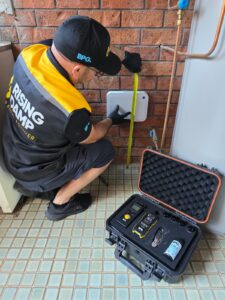
At Rising Damp™, every assessment starts with understanding how moisture is actually behaving within the wall, including moisture mapping and salt testing, before any solution is recommended. Getting the diagnosis right the first time avoids paying for a treatment that was never going to fix the actual problem.
Frequently asked questions
Can rising damp affect your health? Rising damp doesn’t directly cause illness, but the moisture it introduces can increase indoor humidity and create conditions for mould growth, which can contribute to respiratory irritation and allergy-like symptoms.
Is mould from rising damp dangerous? Mould linked to rising damp can trigger nasal congestion, coughing, eye irritation, and aggravated asthma symptoms in sensitive individuals, particularly children, older adults, and people with existing respiratory conditions.
Can damp walls cause respiratory problems without visible mould? Yes. Moisture can raise indoor humidity and contribute to airborne irritants even before mould becomes visible, which is why a persistent musty smell is worth investigating on its own.
Will cleaning mould fix the problem? No. Cleaning mould only removes the visible growth. Unless the underlying moisture source, such as rising damp, is identified and resolved, the mould will typically return.
Healthy homes start with dry walls
Your home should be a comfortable, healthy place to live. Rising damp is one possible contributor to poor indoor air quality, but it’s not the only one. Water ingress, plumbing leaks, failed waterproofing, and condensation can all create similar symptoms.
The starting point is always the same: get an accurate diagnosis before deciding on treatment.
Learn more about what causes rising damp and how it’s diagnosed
If you’re noticing damp walls, recurring mould, or a musty smell that won’t go away, book a free rising damp assessment and get a clear answer on what’s really happening in your home.