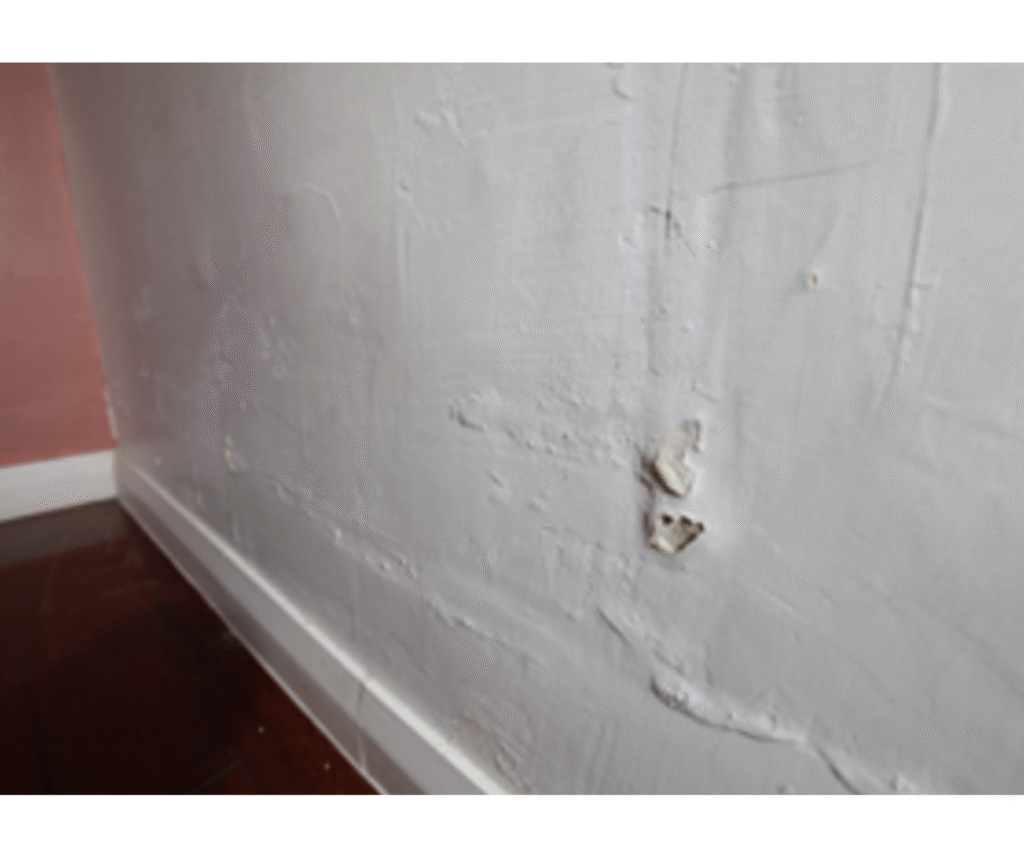
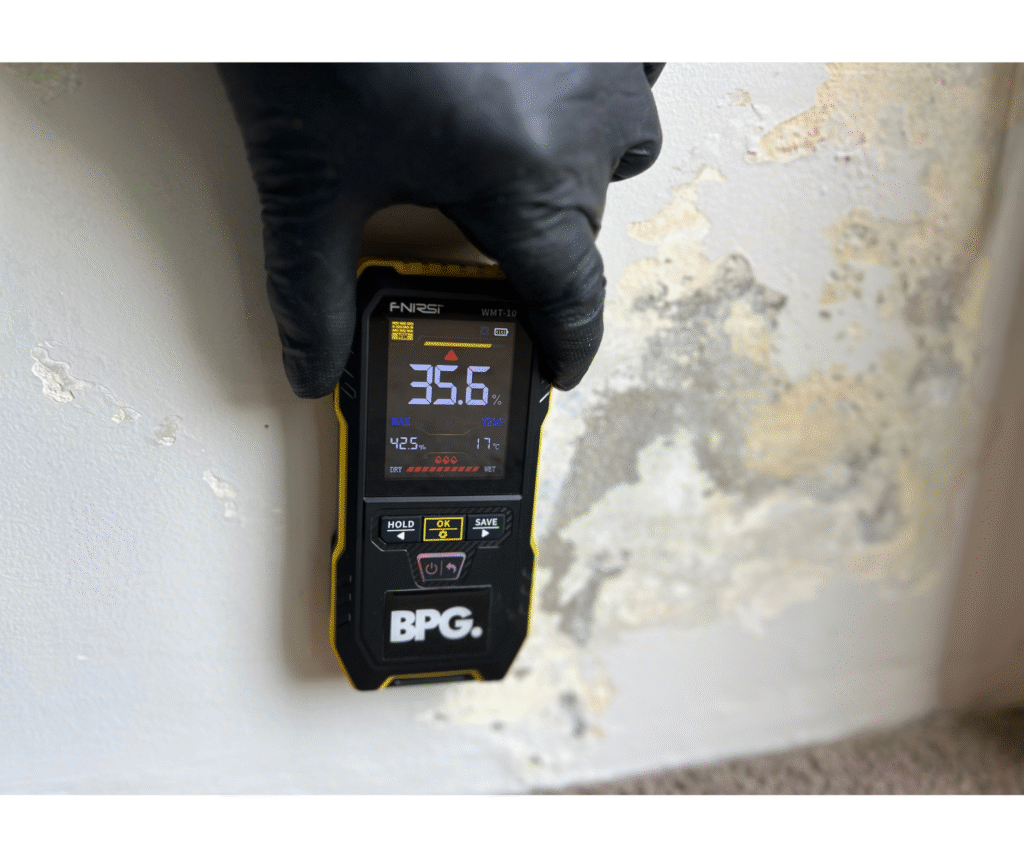
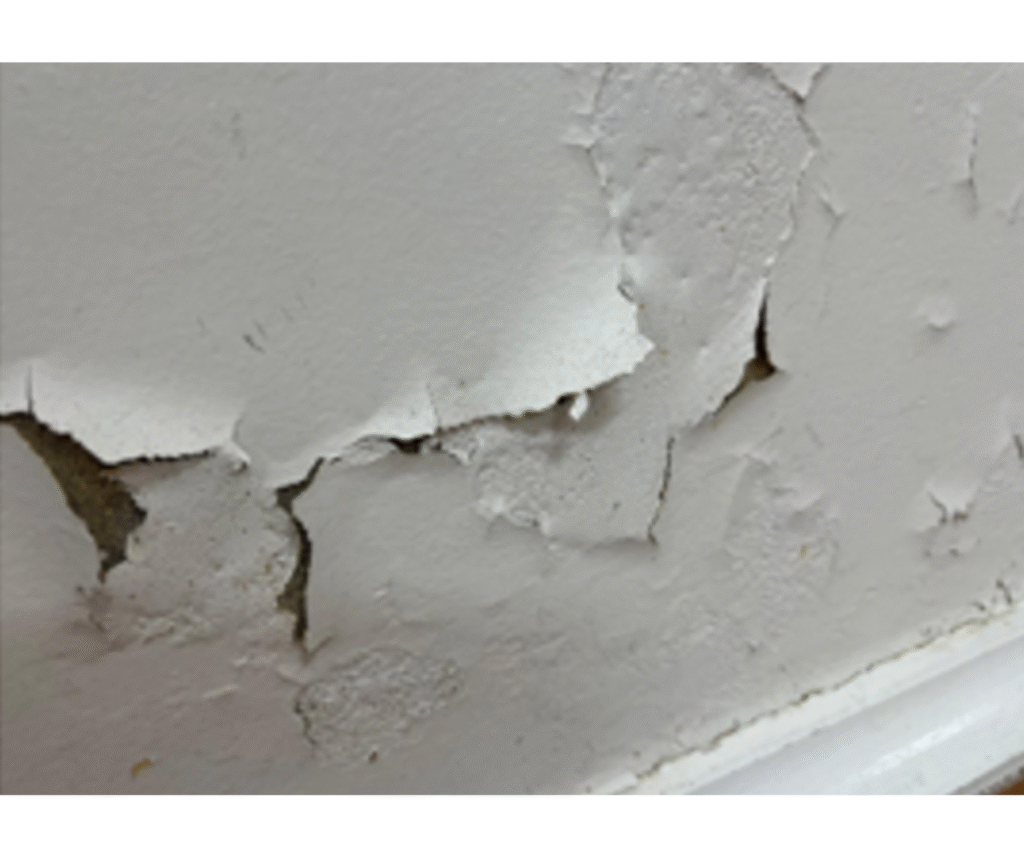
Rising damp happens when moisture from the ground moves upward through brickwork or masonry, carrying salts and minerals that damage plaster, paint, and flooring. Over time, it leads to peeling walls, crumbling finishes, and a musty, unhealthy indoor environment.
What makes rising damp different from other types of moisture problems is its cause. It’s driven by the electrical charge of water molecules, which naturally move upward through porous materials. Traditional methods, like injection or waterproof coatings, only treat the visible effects on the surface. Without addressing the electrical cause, the problem often returns. That’s why modern technology, like the I.P.E® Pro+ system, is designed to stop rising damp at its source, safely, permanently, and without invasive building work.
Common Signs and Symptoms
Damp or discoloured patches on
lower walls
Blistering paint, crumbling plaster, or
peeling walls
White, powdery deposits on the
wall surface
Musty smells or mould near the
base of walls
FAQ's
Is the I.P.E® Pro+ system proven to work?
Yes, the I.P.E® Pro+ has been independently certified and tested in Europe, with over 20,000 units installed worldwide. It’s trusted by engineers and building professionals in more than ten countries and comes with a 30-year manufacturer’s warranty for complete peace of mind.
How can a small device really stop rising damp?
The system uses low-frequency electromagnetic signals to reverse the electrical polarity of water molecules within your walls and slab. This change in polarity stops moisture from rising and allows it to return to the ground naturally, a proven scientific process, not a quick fix.
Will it work on my type of property?
Yes, the I.P.E® Pro+ is suitable for most building types, including brick, block, concrete, and heritage structures. It’s ideal for both residential and commercial properties and is especially effective in older or hard-to-access buildings.
What does the installation involve?
Installation is quick, clean, and non-invasive. The compact unit is mounted discreetly and connected to a power source, no drilling, cutting, or messy building work required.
How soon will I see results?
Most properties show noticeable improvement within a few months and are fully dry within 6–12 months. You’ll receive two follow-up visits (at 6 and 12 months) and app access to track real-time moisture levels yourself.
What happens after installation?
Our team conducts 6-month and 12-month follow-up visits to record new moisture readings and confirm performance. After the first visit, you’ll receive access to our mobile app to track ongoing drying progress in real time.
Does it protect the entire property or just certain walls?
Each unit protects the entire property, including all walls, and the concrete slab. Models are available to treat areas from 100m² to 2,500m², meaning one system can protect anything from a small home to a large commercial building.
Is it safe for my family, pets, and electronics?
The I.P.E® system operates at an extremely low frequency of around 1.5 kHz. For comparison, radio frequencies start at 50 kHz, and Wi-Fi runs at 2.4 GHz, which is much higher than the I.P.E®. This makes the system perfectly safe for families, pets, and all household electronics.
Does it require any maintenance or ongoing costs?
No maintenance or servicing is required. The system runs silently 24/7, uses minimal electricity (around $20 a year), and has no moving parts or consumables.
What if I plan to sell my property, is it still worth installing?
Yes, rising damp is a major concern in building inspections, and installing the I.P.E® Pro+ can actually increase property value and buyer confidence. The system is fully transferable to the new owner, and the 30-year manufacturer’s warranty remains valid with the property, making it a smart long-term investment.
Urgent Assessment Recommended
Rising Damp Gets Worse and More Expensive - Over Time
Delaying treatment can lead to structural damage, ongoing repairs, and reduced property value.
Early assessment helps prevent structural damage and unnecessary repair costs